
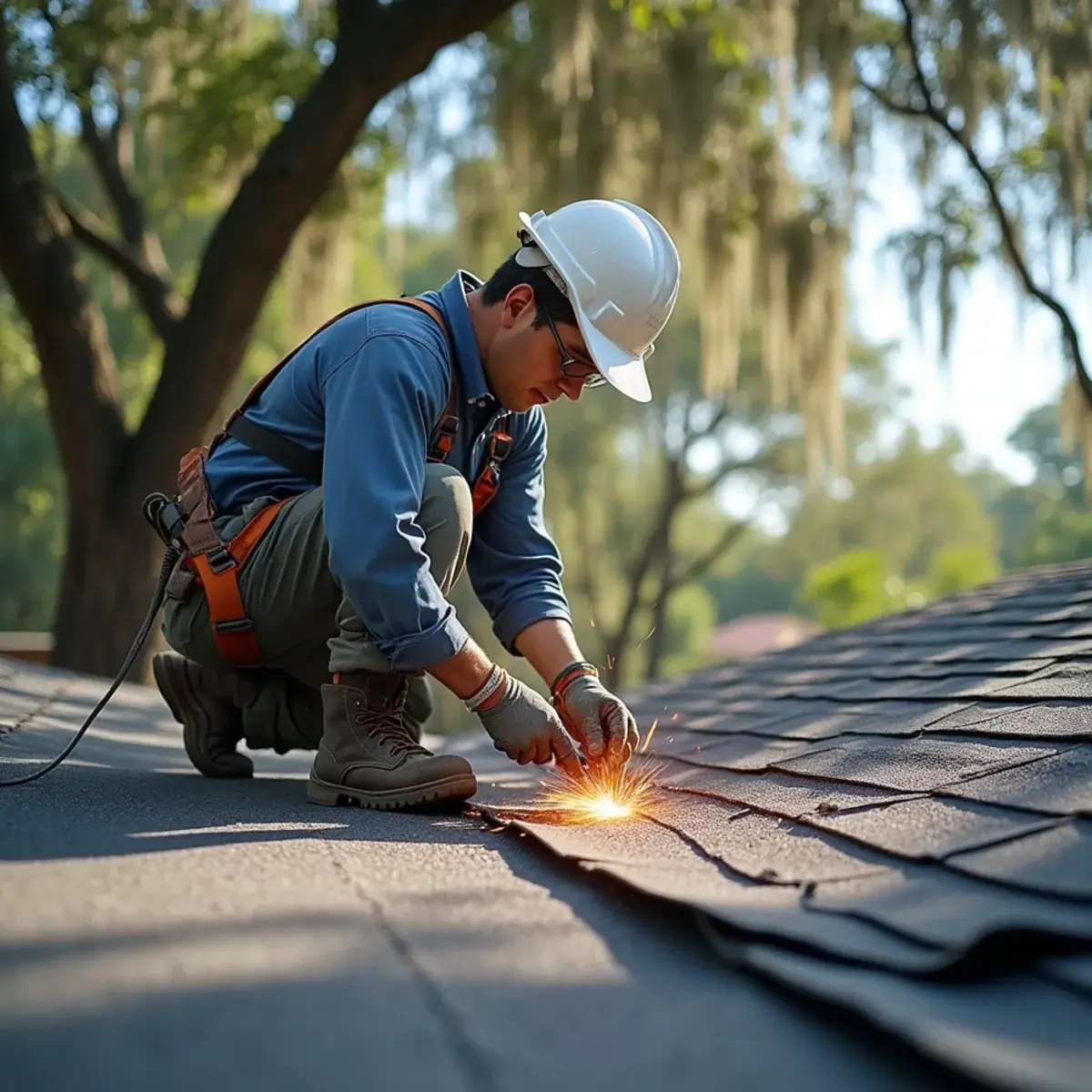
Flat roof repair in Winter Park, FL is rarely about a big commercial roof. It is the low-slope section over a Florida room, a porch enclosed decades ago, a carport, or the flat middle of a mid-century home. These sections shed water slowly, and with near-daily summer storms, slow drainage finds every weak seam.
Most flat roof leaks start in a few predictable places: the seam where the flat section meets the main roof, a clogged scupper, a blistered membrane, or a coating rolled over a roof that was already wet. The roofer we send checks all of them, because fixing the symptom without the cause brings the same leak back next July. Every roofer we send is licensed and insured in Florida.
Where Flat Roofs Sit on Winter Park Properties: Florida Rooms, Porches, Carports, Mid-Century Homes
About 58% of Winter Park homes were built between 1950 and 1980, an era that loved low-slope roofs. Ranch homes got Florida rooms off the back, porches were enclosed under a shallow shed roof, and carports were walled in to make a den. Florida code does not allow asphalt shingles below a 2:12 pitch, so these areas need a membrane instead.
- Florida rooms and enclosed porches, usually a shed roof sloping gently away from the house
- Carports and carport conversions, often with a thin original deck and little drainage
- Mid-century flat sections, with interior drains or scuppers through a parapet
- Additions and garage roofs, built decades after the house and tied into its roof
The pattern continues past the city line, from older ranch homes with low-pitch additions in Casselberry to older homes in Maitland and Goldenrod.
What a flat roof repair includes
On a low-slope roof the leak is often several feet from the stain, so the visit covers the whole section, not only the wet spot. Here is what the roofer we send typically handles.
- A walk of the entire flat section, edges and parapets included, where it is dry and safe to stand.
- Clearing of scuppers, drains and gutter edges so the ponding pattern can be read.
- Moisture readings to find wet insulation or plies trapped under the membrane.
- A close check of the tie-in where the flat section meets the shingle or tile slope.
- Repairs in the same membrane the roof already has: modified bitumen patched with mod bit, TPO patched with heat-welded TPO.
- Resealed or replaced flashing at walls, curbs, vents and edge metal near the leak.
- Removal of old roof cement and failed patch material that would keep new work from bonding.
- Before-and-after photos, plus notes on any ponding area that needs drainage work later.
Our flat roof repair process, step by step
- Stop the water, then wait for dryIf the room below is getting wet, the roofer can put temporary protection down right away. Permanent membrane work waits for a dry surface, because adhesives, torches and TPO welds don't bond on a wet roof.
- Clear the drains and read the waterLeaves and acorns come out of scuppers and drains first. Where water stood, the lines it left behind and any soft spots underfoot show how the roof drains and where to look next.
- Find what is wet underneathMoisture readings across the section show whether water is trapped in the insulation or between plies. A small wet area can be cut out and patched; a wide one changes the plan.
- Trace the leak to its sourceThe roofer checks seams, edge metal, wall flashing, penetrations and the tie-in to the main roof, then matches what turns up to where the stain shows inside the Florida room, porch or converted carport.
- Price the fix in writingYou see photos and a written price before work starts, with tie-in rebuilding or drainage changes shown as their own items, so you can tell the leak repair apart from a drainage upgrade.
- Repair and confirm the drainageAfter the repair, the roofer checks that water runs to the scupper or drain instead of pooling, photographs the finished seams and flashing, and notes anything worth watching after the next heavy rain.
Signs of Trouble: Ponding Water, Blisters, Open Seams, Ceiling Stains
Low-slope roofs usually warn you before they leak badly. Most signs can be spotted from a second-story window or the top of a ladder; walking a wet flat roof is not worth the risk.
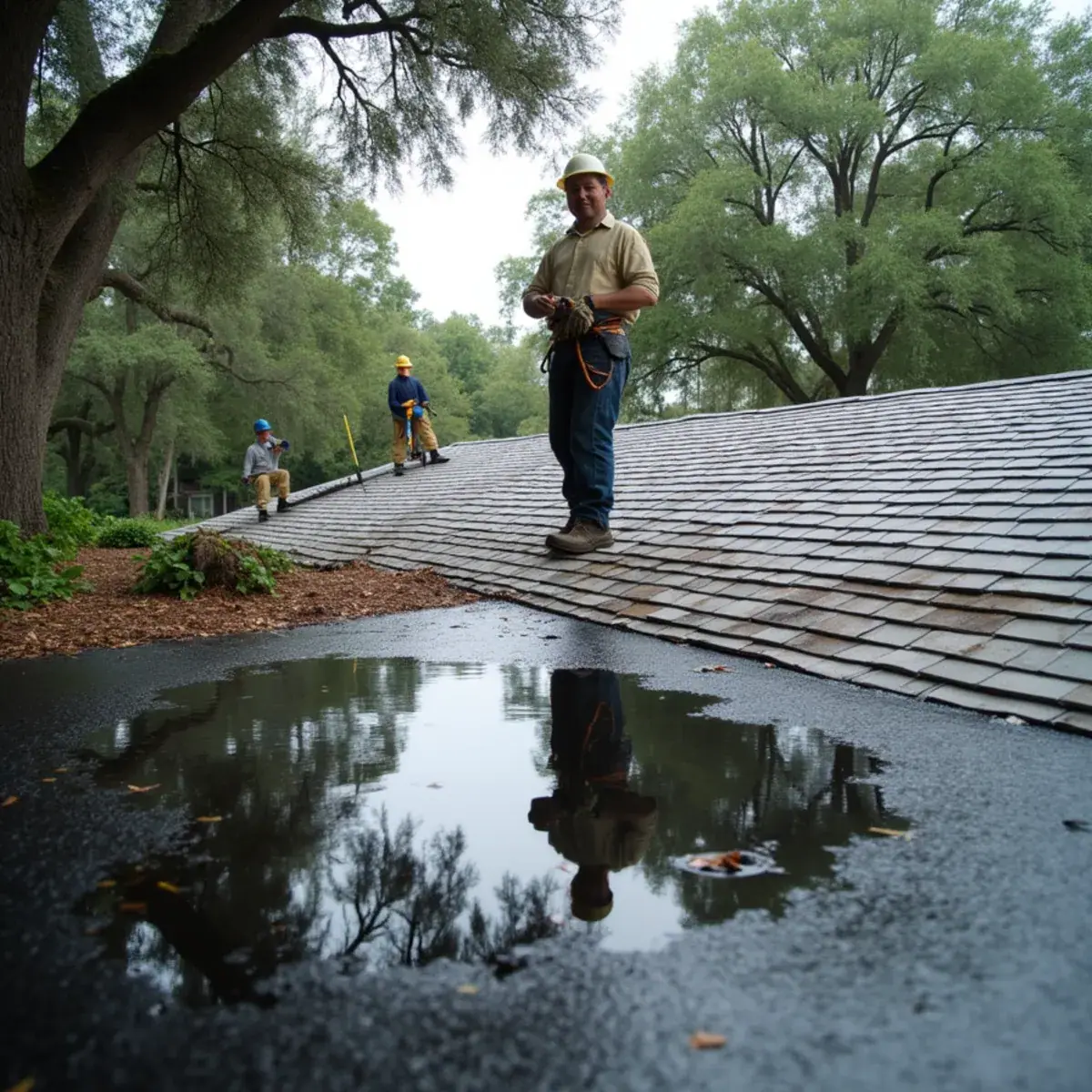
- Ponding water: a common rule of thumb is that water still standing 48 hours after rain is a drainage problem.
- Blisters: trapped moisture between plies that swells in the sun and eventually splits.
- Open seams and lifted edges at laps, the perimeter or around vents.
- Cracked surfacing or bare spots where granules have worn off modified bitumen.
- Ceiling stains, sagging drywall or a musty smell in the room below, often away from the actual entry point.
If water is coming in during a storm right now, see what to do when your roof leaks during a storm.
Membranes Explained: Modified Bitumen, TPO and Built-Up Roofs
Residential flat roofs around Winter Park use one of three systems, and the repair has to match it.
| Membrane | What it is | Typical trouble | Repair |
|---|---|---|---|
| Modified bitumen | Rubberized asphalt sheets, torched, mopped or self-adhered, usually with a granule cap | Seam laps, blisters, granule loss, wall flashing | Matching mod bit patches, resealed seams, new flashing |
| TPO | White single-ply sheet with heat-welded seams | Poorly welded seams, punctures, curb flashing | Hot-air welded TPO patches on cleaned sheet |
| Built-up roof (BUR) | Layers of felt and hot asphalt under gravel or a coating, common on older homes | Cracked plies, bare spots, wet layers | Spot repairs with matching plies; often replaced once wet |
Mixing incompatible materials causes many repeat leaks. Asphalt roof cement smeared on a TPO seam, for example, will not bond and can damage the sheet.
Repair Methods: Seam and Flashing Repair, Patches, Coatings, Re-Cover
Seam, flashing and patch repairs
Most flat roof leak repair happens at seams and edges. The roofer dries and cleans the area, cuts out failed laps and welds or adheres new material across them. Wall flashing, edge metal and vent flashings get the same treatment. Punctures from dropped limbs are cut out and patched with matching membrane that extends well onto sound material.
Roof coatings
A roof coating can extend the life of a membrane that is sound, dry and drains well, by reflecting heat and sealing light surface wear. It is not a fix for wet insulation, open seams or standing water, and coating over those hides them. The roofer should check for moisture before recommending one.
Re-cover
A re-cover installs a new membrane over the existing one. Florida code does not allow it over a water-soaked or badly deteriorated roof, or over a roof that already has two layers, in most cases; the roofer confirms what applies.
The Tie-In: Where a Flat Section Meets a Shingle or Tile Slope
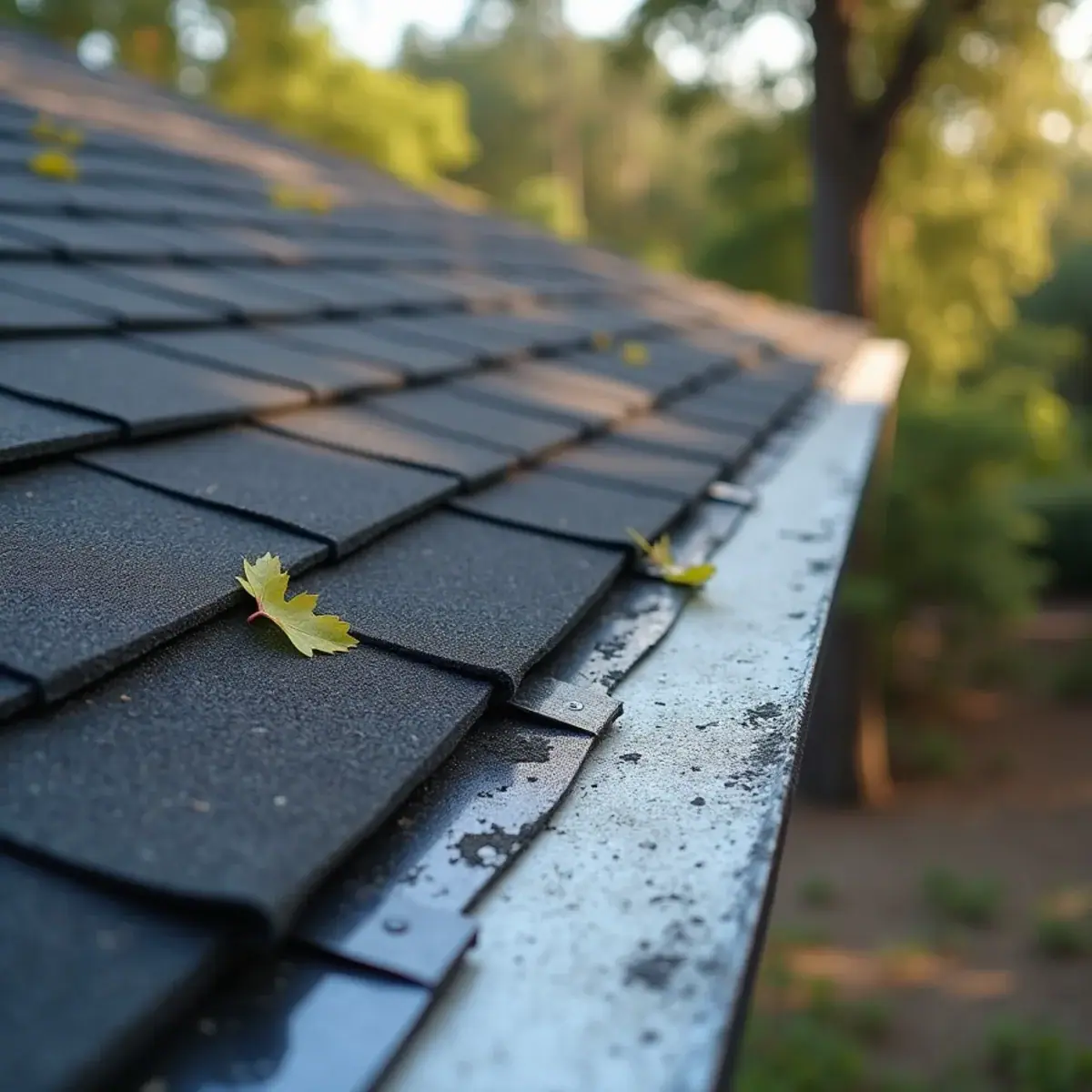
The tie-in is the single most common leak point on a Winter Park home with a Florida room. It is where a low-slope membrane meets a pitched shingle or tile roof, often installed decades apart.
Done right, the membrane runs up under the shingles or tile, with metal flashing and the slope's underlayment lapped over it so water always flows from one layer onto the next. Done wrong, the membrane is laid on top of the shingles and sealed with roof cement, which holds for a season or two until the sun opens it.
A proper fix removes the lower courses of the slope, rebuilds the transition with new membrane and flashing, and relays the shingle or tile. A stain near the wall between the house and the Florida room points here first; our roof leak repair page covers tracing less obvious leaks.
Drainage Fixes: Scuppers, Drains and Tapered Insulation
A flat roof should never be truly flat. Water has to reach a scupper, drain or gutter edge, and under the oak canopy those exits clog with leaves and acorns quickly.
- Scuppers: openings through a parapet or edge that dump into a gutter. They clog, and their flashing is a frequent leak point.
- Interior drains: found on some mid-century flat roofs, with a strainer that has to stay clear.
- Tapered insulation and crickets: sloped boards or small ridges that push water toward drains and away from walls.
- Deck repairs: a sagging deck makes a permanent pond, so soft sheathing is replaced first.
Better drainage is often what turns a roof that needs yearly patching into one left alone for years.
When a Flat Roof Needs Replacing Instead of Patching
Patches make sense for isolated problems. They stop being worth it when:
- Moisture readings show wet insulation or plies across much of the roof
- Blisters, cracks or open seams are spread across the whole surface
- The roof already has two layers, ruling out a re-cover
- The deck is soft in more than one spot
- Leaks keep moving to new places on an aging membrane
Flat roof replacement is a permitted job. Winter Park Building and Permitting Services covers homes inside city limits, and neighboring cities and counties across our service areas run their own offices; the licensed roofer pulls the permit. If the main roof is also near the end, roof replacement is the best moment to rebuild the tie-in.
What Affects Flat Roof Repair Cost
The roofer gives a written price before work starts. The main drivers:
- Membrane type and matching material
- Number and size of repair areas
- Wet insulation or deck damage found under the membrane
- Tie-in rebuilding, which involves the shingle or tile slope too
- Drainage changes such as new scuppers or tapered insulation
- Access, permits and disposal
See what drives roof repair cost in Winter Park for more detail. If a limb or storm caused the damage, storm damage roof repair covers how that work is documented.
Why Winter Park homeowners call Zana Roofers for flat roof repair
- Tie-ins checked firstWhere a Florida room or porch roof meets the main slope is where most low-slope leaks start around here. The roofers we send know that seam well and look at it before patching anything in the middle of the roof.
- No coating sold over a wet roofIf moisture readings show wet layers, you hear that a coating won't fix it, even though a coating is the easier sale. The recommendation follows what the readings and photos show, and a repair is the answer when a repair is enough.
- Photos of a roof you rarely seeMost homeowners never stand on their flat roof. The roofer photographs the seams, drains, ponding areas and tie-in, so you can see what failed and what the repair changed.
- Answered when the Florida room floodsLow-slope leaks tend to show up in the middle of a hard afternoon storm. The line is answered 24/7, and temporary cover until the roof is dry is priced separately from the lasting repair.
Flat Roof Repair questions from Winter Park homeowners
How long can water sit on a flat roof before it is a problem?
A common rule of thumb is 48 hours. Water that drains within two days of rain is normal on a low-slope roof; water still standing after that points to a clogged drain, a sagging deck or poor slope. Standing water ages the membrane faster, and in Winter Park's rainy season it may never dry out between storms.
Can a roof coating stop a flat roof leak?
Not on its own. A coating works on a membrane that is sound, dry and drains well. If the leak comes from an open seam, failed flashing, wet insulation or ponding, coating over it hides the problem instead of fixing it. Those repairs come first, and the roofer should check for moisture before coating anything.
How long does a modified bitumen roof last in Florida?
Often somewhere around 12 to 20 years, depending on the number of plies, the surfacing, drainage and upkeep. Florida sun is hard on asphalt-based roofs, and ponding water shortens their life. A mod bit roof that drains well and gets its seams and flashings checked every few years tends to reach the longer end.
Do insurers treat flat roofs differently from sloped roofs?
Some do. Underwriting rules vary by company, and some insurers apply different age limits or ask more questions about low-slope sections and certain membranes. Florida roof inspection forms record the covering type and age of each part of the roof, so a flat section can affect how the whole roof is rated. Ask your agent how your insurer handles it.
Can a flat roof be repaired in the rain?
Only temporarily. A roofer can cover a leaking flat section with temporary protection during a break in the weather, but a permanent repair needs a dry surface. Modified bitumen adhesives, torch-applied laps and TPO heat welds don't bond to a wet membrane, and sealing moisture in causes blisters later. Nobody should be on any roof during lightning, so the lasting repair is scheduled for dry weather.
How often should a flat roof be inspected?
Once a year is a sensible minimum for a residential flat roof in Central Florida, ideally in spring before the rainy season, plus a roof inspection after any major storm or limb strike. Under heavy oak cover, scuppers and drains may need clearing several times a year, because one clogged scupper can leave water standing on the roof for days and age the membrane faster.
Page reviewed by Zana Roofers.