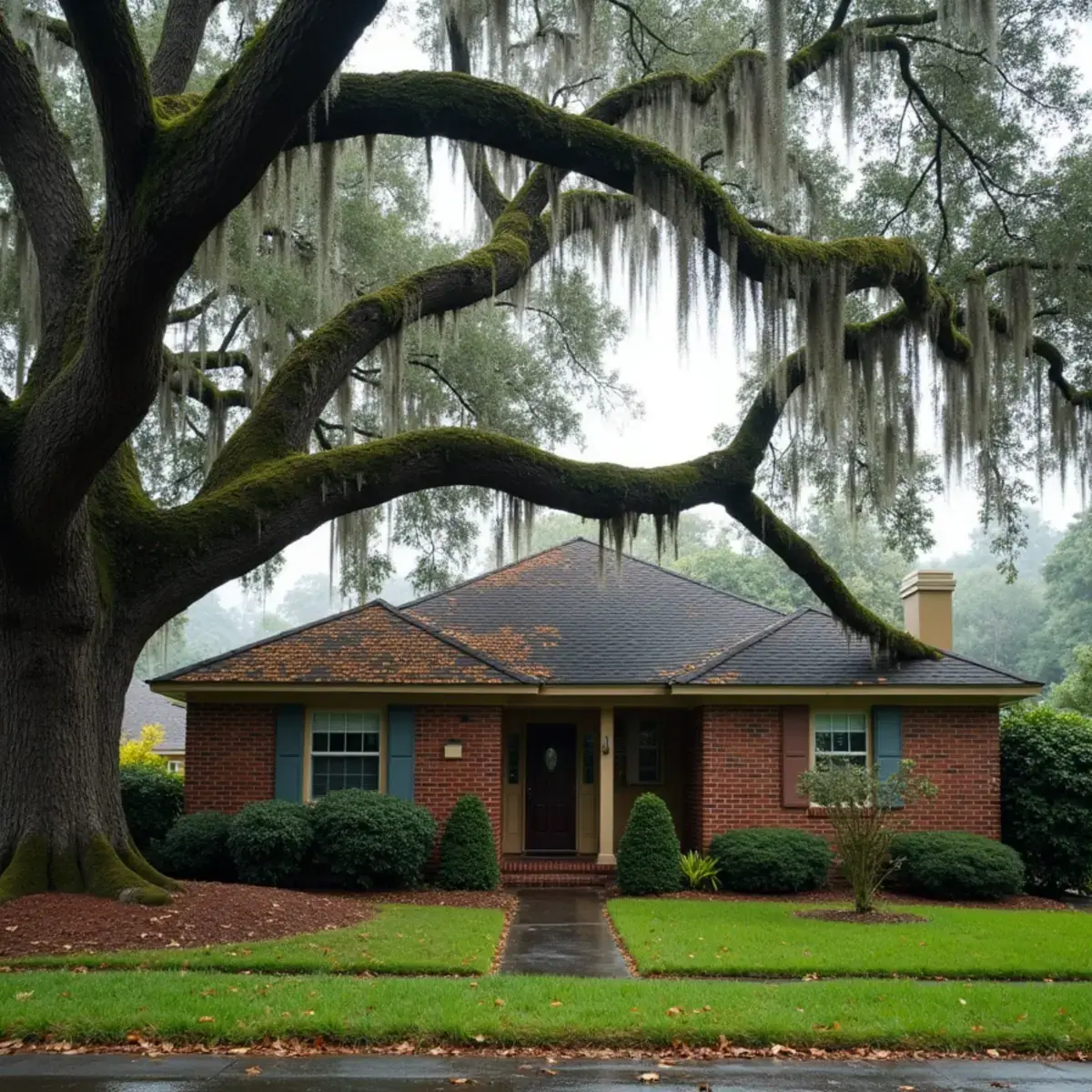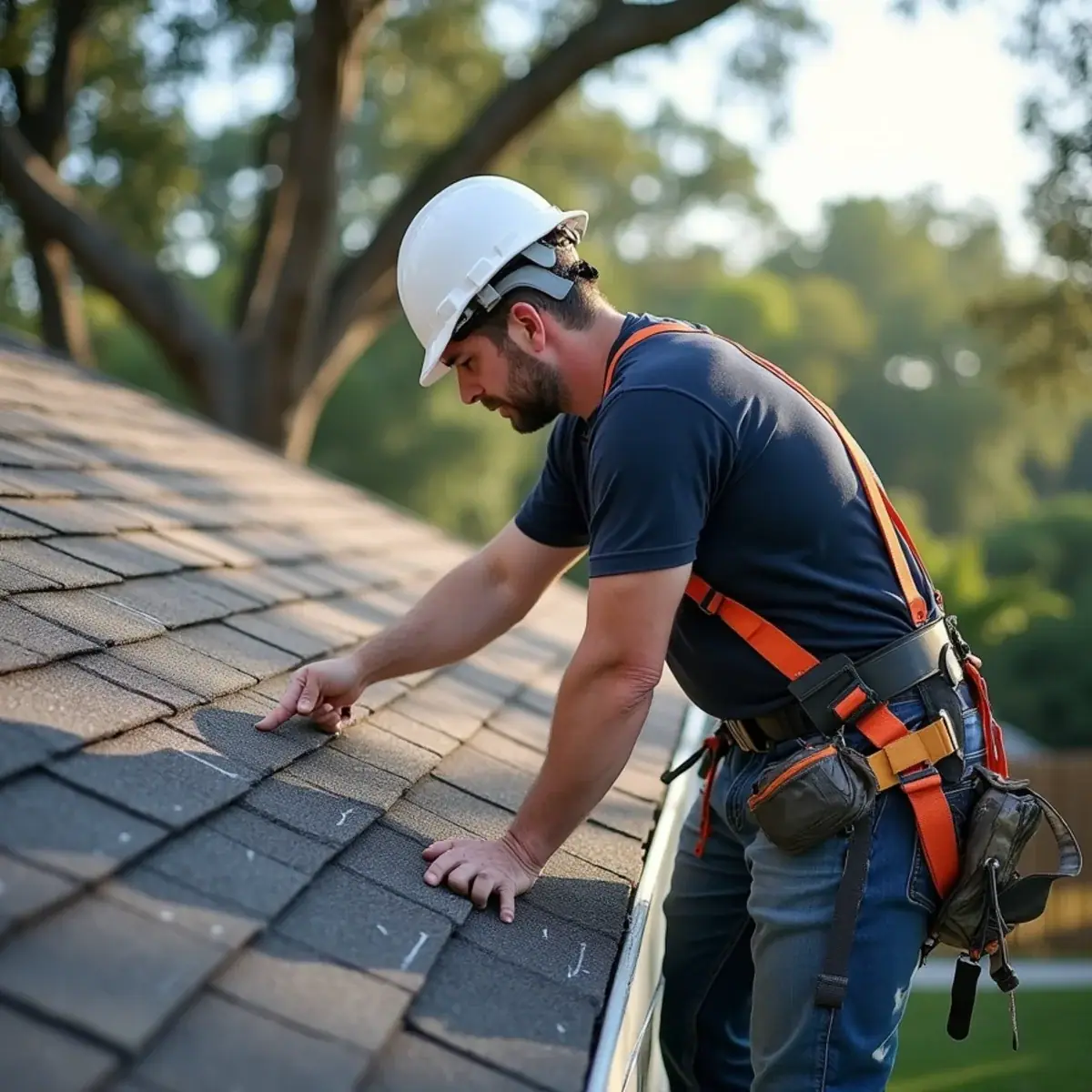
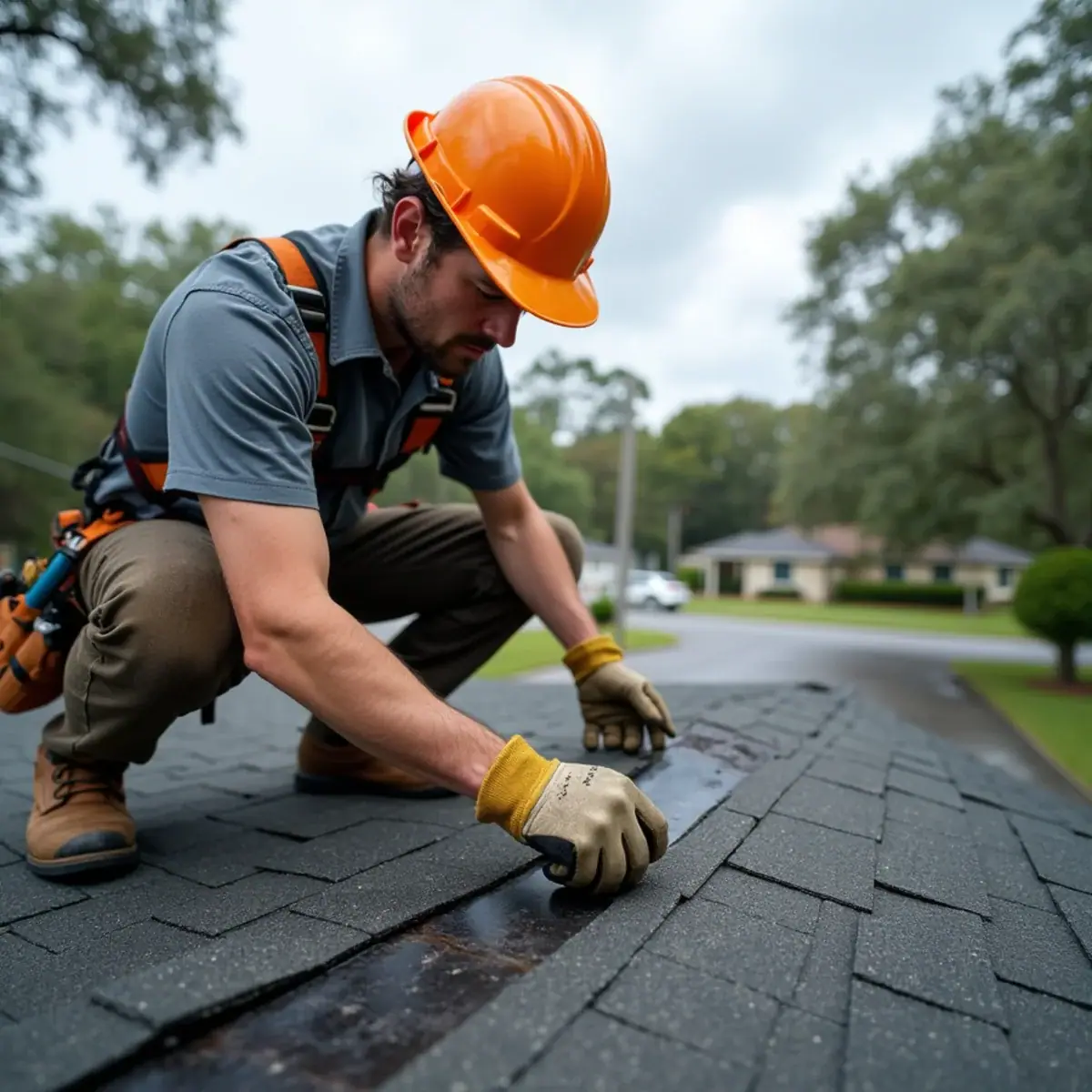
If a storm has torn shingles loose, cracked your tile or dropped an oak limb on the house, call (773) 207-0769 at any hour and we will send a licensed roofer to tarp, document and repair the damage as soon as it is safe to be on the roof. Storm damage roof repair in Winter Park, FL comes down to two jobs: stopping water today, and finding the damage that would otherwise leak next month.
Mid-century shingle ranches, Mediterranean-style tile homes and low-slope Florida rooms each take a storm differently, and the city's live oak and camphor canopy adds a risk few Florida towns share. Below: what the damage looks like, the first day, insurance paperwork, and when a repair becomes a replacement.
Storm damage the roofer repairs: lifted shingles, broken tiles, punctures, torn flashing, soffit and fascia
One visible problem usually has company, so the roofer we send checks the whole roof, not just the spot you pointed at.
- Lifted and missing shingles. Gusts get under edges at rakes, eaves and ridges first, and the shingles beside a missing one are often loose too.
- Broken and slipped tiles. Clay and concrete tile cracks under falling branches and shifts on old fasteners, leaving underlayment open to rain while the roof looks fine from the yard.
- Punctures. Branch stubs and flying debris can drive through shingles and the decking beneath.
- Torn flashing. Wall flashing, chimney flashing and drip edge pull loose, and rain runs behind the lifted edge.
- Soffit and fascia damage. Gutters ripped down by limbs often take fascia and soffit with them, opening the attic to rain and animals.
- Ridge caps and vents. Often the first parts to blow off, leaving an open slot along the top of the roof.
On mid-century homes in Winter Park and Casselberry, the seam where a flat Florida room roof meets the main slope is one of the first places wind-driven rain gets in.
What storm damage roof repair includes
A storm visit covers more than the hole you can see from the driveway. Here is what the roofer we send handles on a typical wind, hail or limb call, from the first cover to the finished repair.
- Temporary cover over any opening, fastened well past the damaged area, when more rain is still a risk.
- A check of every slope, since wind usually loosens more than the one spot that failed.
- Hand checks of shingle tabs along rakes, eaves and ridges for creases and broken seal strips.
- An attic look at the decking, rafters and trusses under any limb strike or puncture.
- Gutters, fascia, soffit, ridge vents and pipe boots checked along with the roof covering.
- Dated photos of each damaged area, before and after the repair, labeled by location.
- A written damage description and repair price, with the roof's install date checked against Florida's 25% rule.
Our storm damage roof repair process, step by step
- Tell us what hit the houseOn the call we ask what happened, when, and whether water is coming in now. A limb still on the roof, an open hole or water near electrical fixtures moves your call to the front of the line.
- Wait for safe conditionsNobody climbs during lightning or high wind. Once the gusts drop, the roofer starts with whatever is letting water in, and a tree crew lifts any heavy limb off before anyone works near it.
- Cover the openingIf rain is still possible, the roofer dries in the damaged area with a tarp or temporary patch fastened past the edges, and photographs the roof before and after it goes on.
- Survey the whole roofWith the water stopped, the roofer works every slope, lifts tabs along the edges, checks tile at ridges and eaves, and goes into the attic to look at the decking and framing under each strike point.
- Put the scope in writingYou get photos, a written description of each damaged area and a price for the permanent repair, with the roof's age and Florida's 25% rule checked so you know whether it stays a repair.
- Repair and close outOnce you approve, the roofer pulls any permit the scope needs, completes the repair with matching material where it can be found, and leaves photos of the finished work for your records.
Fallen limbs and whole trees: Winter Park's oak canopy and your roof
Winter Park sits under a dense canopy of live oak with plenty of camphor mixed in. Live oaks spread long limbs over rooftops that grow heavy with moss and soaked leaves in a storm, and brittle camphor sheds large branches in strong wind.
Even a branch that bounced off can crack shingles, break tile, bend gutters and split the decking underneath. A whole tree can crack rafters or trusses, which makes it a framing repair before it is a roofing repair.
Tree damage roof repair: what the roofer checks
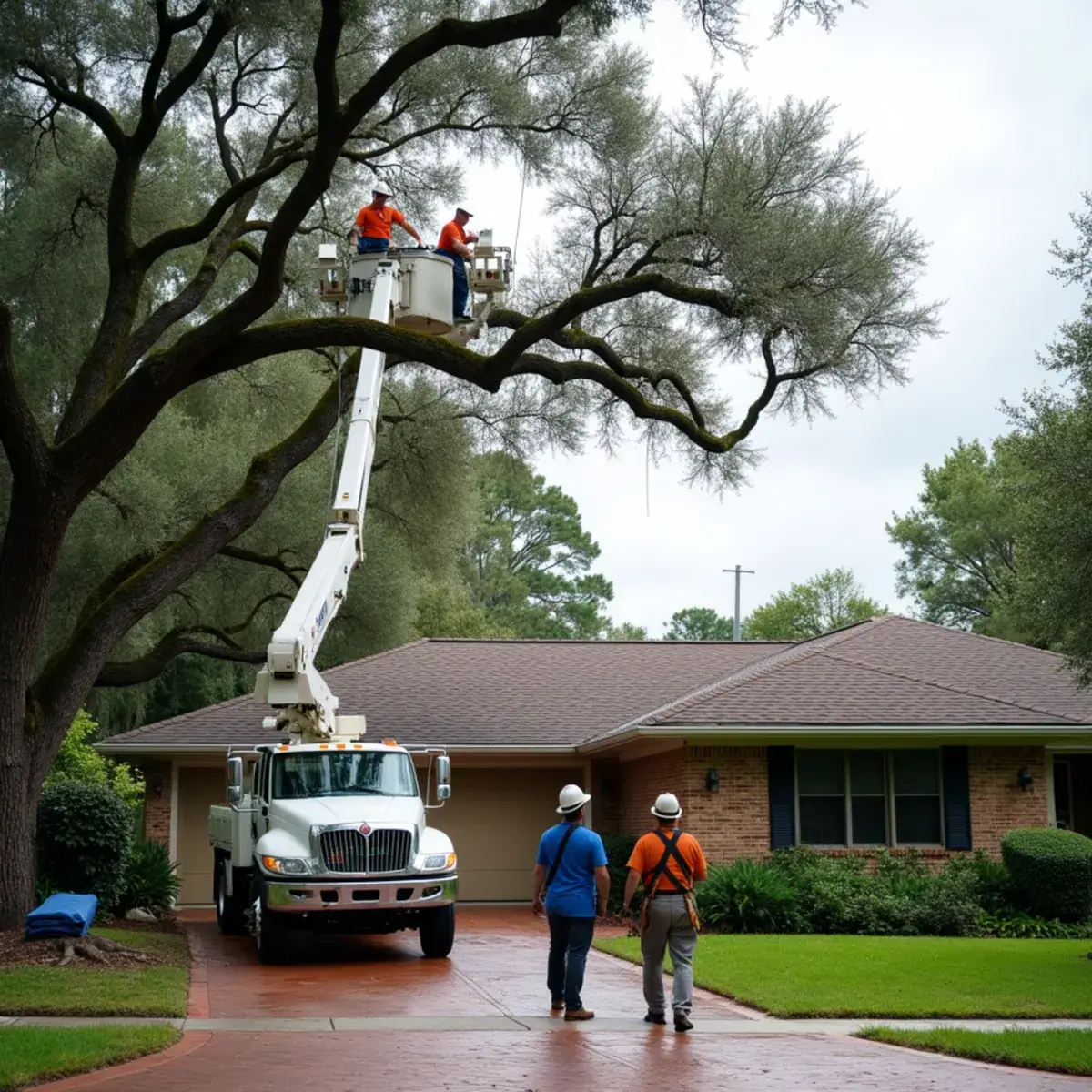
- Whether the limb is still on the roof. Large limbs come off with a tree crew and rigging, never dragged across the shingles.
- The decking at the strike point, from above and from the attic.
- Rafters and trusses for cracks that need a structural fix before new roofing goes on.
- Shingles, tile and flashing around the impact, often several feet past the visible mark.
- Gutters, fascia and soffit along the eave where the limb landed.
The oak-shaded lakefront streets of Maitland and the rest of our Winter Park area service region see the same pattern. For trimming and warning signs in the canopy, read our guide to oak limb roof damage in Winter Park.
Wind damage you cannot see from the ground: creased shingles and broken seal strips
Shingles are held by nails and a sealant strip bonding each course to the one below. In a hard gust a shingle can lift, flex and drop back. From the street it looks normal; up close there is a crease across the tab and the seal has let go.
That shingle lifts more easily next storm, can tear off along the crease, and lets sideways rain under it. So wind damage roof repair starts with the roofer lifting tabs by hand along rakes, eaves and ridges and photographing what turns up.
A few signs you can check safely from the ground:
- Shingle pieces, nails or granules in the yard or at downspouts.
- A ridge line or shingle row that looks wavy.
- New ceiling stains near exterior walls.
Sun-dried sealant on older roofs lets go more easily, which is common on the second and third shingle roofs in Goldenrod.
Hail and afternoon thunderstorm damage in Central Florida
Hail is rarer here than in the Plains, but summer thunderstorms over Orange and Seminole counties do produce it, usually small and brief. What it does depends on the stone size and the roofing.
| Roof type | What hail does | What the roofer checks |
|---|---|---|
| Asphalt shingle | Knocks off granules and leaves soft, dark bruises | Granules in gutters, bruises felt by hand, exposed mat |
| Clay or concrete tile | Cracks, chips edges and breaks corners | Individual tiles and the underlayment under any cracked piece |
| Metal | Dents panels and scuffs the coating | Seams, fasteners and flashing near dented areas |
| Flat or low-slope | Bruises or punctures the membrane | Seams, drains and areas around rooftop equipment |
More often, afternoon storm damage is wind and water: a downburst peeling shingles off one slope, or hard rain finding a worn pipe boot or leaf-packed valley.
The first 24 hours: tarp, photos, and what not to throw away
Stay off the roof: wet shingles and tile are slick, and damaged decking can give way. Then work through this list.
- Control water inside. Move belongings, set buckets under drips and switch off the breaker for any wet light fixture or ceiling fan.
- Photograph before anything moves. Wide shots and close-ups from the ground, plus every stained ceiling.
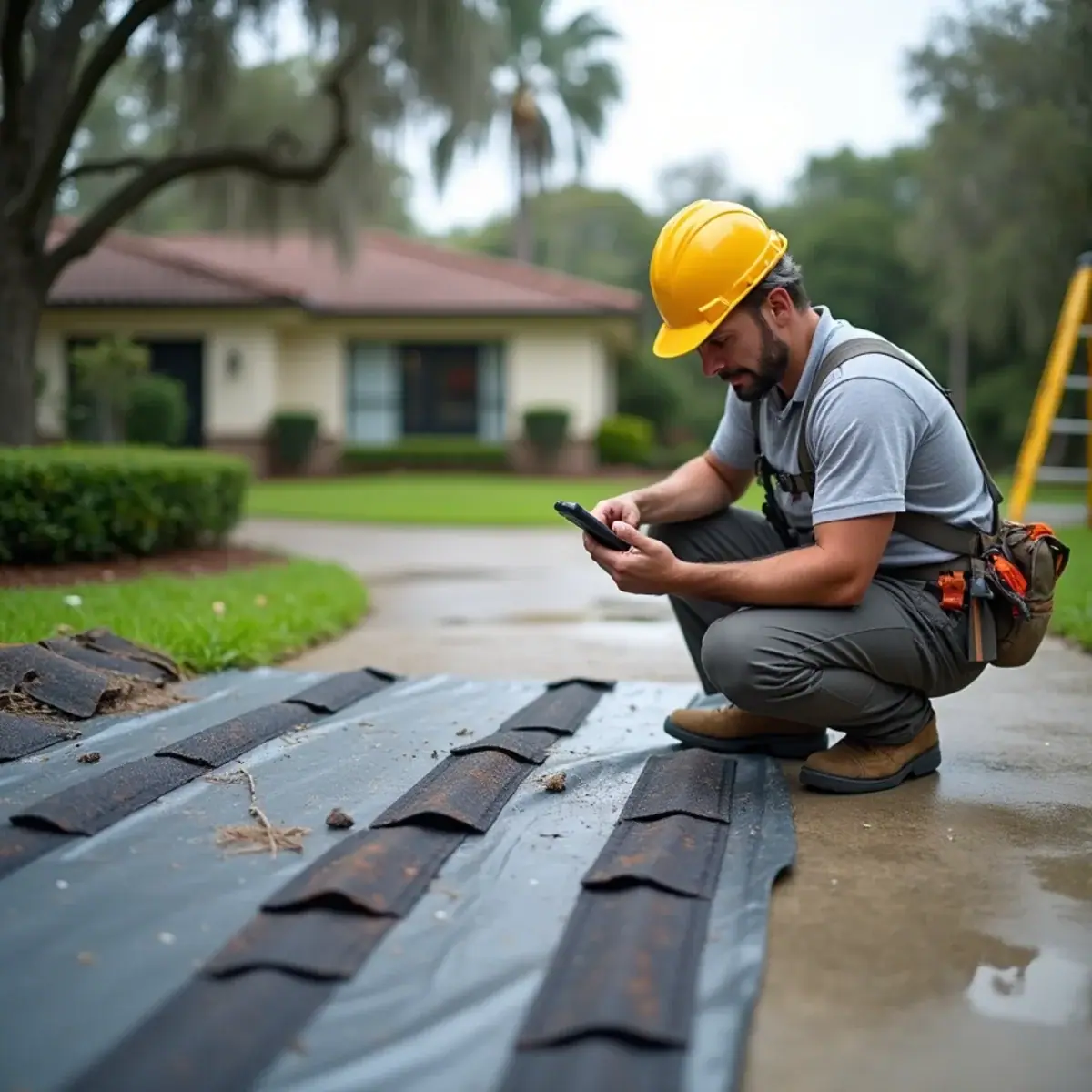
- Get the opening covered. The roofer we send fastens a tarp well past the damaged area and photographs the roof before and after. Our page on emergency roof repair and tarping explains how that works.
- Keep the damaged pieces. Save broken shingles, tile fragments and torn flashing. An adjuster or the roofer may want to see them.
- Keep every receipt and a note of what happened. Tarping, tree removal and cleanup are often separate bills; write down the date, time and what you saw.
Before the tree crew hauls it away
Photograph the limb on the roof and the damage under it before anything is cut or removed. Once the debris is gone, so is the clearest record of what hit the house.
Your insurer and your roofer: documentation, deductibles and who does what
Your insurer, through its adjuster, decides what your policy covers and pays. The roofer assesses the physical damage, explains the repair and gives you a written price. Whether to file a claim is your decision; if you are unsure, talk to your agent.
Roof insurance claim documentation from a roofer means dated photos, a written damage description and a written estimate. It is worth having whether or not you file.
How deductibles work in Florida
Most Florida homeowners policies carry two deductibles. Damage from a hurricane falls under the hurricane deductible, usually a percentage of your dwelling (Coverage A) limit, commonly 2%, 5% or 10%, applied once per hurricane season. Damage from other storms, such as an afternoon thunderstorm or a limb falling on an ordinary day, normally falls under the all-other-perils deductible. Your declarations page lists both.
The deductible is yours to pay. Florida law prohibits a contractor from paying, waiving or rebating it, and the notice on this page sets out the rule.
Repair or full replacement after a storm: how Florida's 25% rule applies
The Florida Building Code says that if more than 25% of a roof section is repaired, replaced or recovered within 12 months, that section must be brought up to current code. After a big storm, that rule often decides whether a repair stays a repair.
Since 2022 there is an exception. If the existing roof was built, replaced or recovered under the 2007 Florida Building Code or later, only the repaired portion has to meet current code, even past the 25% mark. Plenty of Winter Park roofs are older than that, so the full rule can still apply.
The roofer measures the damage against the section, checks when the roof went on, and tells you whether it is a repair or a reroof. See roof replacement in Winter Park for that process and Florida's 25% roof rule explained for the details.
What Charley, Irma, Ian and Milton did to Winter Park roofs
Four storms shape how Winter Park thinks about roofs. Charley in August 2004 crossed Central Florida as a wind event and brought down large oaks and limbs across the city. Irma in September 2017 was another wind storm, with tree and limb damage under the canopy and lifted shingles on older roofs.
Ian in September 2022 was mostly a rain event here, with about 13 inches recorded at Orlando International Airport. Roofs that had handled wind for years leaked through worn flashing, tired tile underlayment and clogged valleys. Milton in October 2024 brought heavy rain again, along with broken limbs across town.
Wind finds loose shingles and weak trees; long rain finds every worn spot in flashing and underlayment. That is why a roof inspection after a storm is often worth booking even when nothing looks wrong.
What affects the cost of storm damage roof repair
Storm repairs vary more than most roof work, because two homes on the same street can take very different hits. The roofer gives you a written price before work starts, after seeing the roof and the attic. These are the things that move it:
- Whether temporary protection comes first. A tarp or temporary dry-in is its own job, and a night or weekend call can carry an after-hours charge, stated before work begins.
- How far the damage spreads. One torn ridge cap is a short repair; creased tabs across two slopes or broken tile at every eave is a larger one.
- What sits under the covering. Cracked decking, a split rafter or a damaged truss under a limb strike means framing work before roofing goes back on.
- Material and matching. Discontinued shingle colors and older clay or concrete tile profiles take longer to source than current products.
- The 25% rule. If the damage crosses that line on a roof installed before the 2007 code, the whole section may need to come up to current code.
- Eave damage. Gutters, fascia and soffit torn down by a limb are usually priced as their own line.
- Tree removal. Lifting a limb off the roof is normally a separate bill from the tree crew.
- Permits and access. Larger repairs need a permit, and two-story eaves or tight lots under oaks take more setup.
For a closer look at each of these, read what drives roof repair cost in Winter Park.
Why Winter Park homeowners call Zana Roofers for storm damage roof repair
- Answered while the storm is still passingOur line is answered 24/7, so you can report the damage at 3 a.m. and have a roofer lined up for the moment the wind drops, instead of waiting for an office to open.
- Tarp and repair priced apartTemporary protection is listed separately from the permanent repair. You can see what was done to stop the water that night and what the lasting fix involves, which keeps your own records clear.
- Photos of what the roofer foundEvery damaged area is photographed with its location noted, including creased shingles and attic damage you would never spot from the yard. The photos are yours to keep, whatever you decide to do next.
- Canopy-aware, and licensed to checkEvery roofer we send is licensed and insured in Florida, and you can look the license up on DBPR. They work under Winter Park's oaks and camphors all the time and know a limb strike rarely stops at the visible mark.
Storm Damage Roof Repair questions from Winter Park homeowners
Should I call my insurance company or a roofer first?
If water is coming in, getting the roof covered usually comes first, because most policies expect you to take reasonable steps to prevent further damage. A roofer can tarp the opening and document what happened. Your agent or insurer can explain your coverage and any reporting deadlines. Whether to file a claim is entirely your decision, so check your policy before you make it.
How soon after a storm can a roofer tarp my roof?
As soon as it is safe. Nobody works on a roof during lightning or high wind, so tarping starts once the storm has moved off and the gusts have dropped. We answer the phone 24/7 and send a roofer as soon as conditions allow. After a hurricane, when many homes need tarps at once, water entering living space and open holes are handled first.
Is a hurricane deductible different from my regular deductible?
Yes. In Florida, the hurricane deductible applies to hurricane damage and is usually a percentage of your dwelling coverage limit, commonly 2%, 5% or 10%, applied once per hurricane season. Damage from an ordinary thunderstorm or a falling limb usually falls under your all-other-perils deductible instead. Your declarations page shows both, and your agent can explain which one would apply.
A neighbor's tree fell on my roof. Whose insurance pays?
Usually your own. In Florida, damage to your house from a neighbor's tree is generally covered under your homeowners policy, not theirs, unless the neighbor was negligent, for example by ignoring a tree that was clearly dead or dying. Policies and facts vary, so check your policy and talk to your agent. Either way, photograph the tree and the damage before anything is moved.
How long do I have to report roof storm damage to my insurer in Florida?
Generally one year from the date of loss for a new or reopened claim, and 18 months for a supplemental claim, under Florida law. Your policy may also require prompt notice of damage, so read its conditions section and ask your agent which deadlines apply to you. Dated photos and a roofer's written findings help show when the damage actually happened.
Can I wait to fix storm damage if the roof isn't leaking yet?
No, not for long. A creased shingle or cracked tile can stay dry for weeks, then let water reach the underlayment and decking in the next wind-driven rain. Many policies also expect owners to prevent further damage once they know about it. If a storm left debris in the yard, a roofer's check with photos tells you what changed while it is still a small repair.
Page reviewed by Zana Roofers.