Quick answer
Clear the rooms beneath the tree and keep away from downed power lines. Don't climb up or cut it yourself; a limb under load can shift. Photograph it from the ground, then call a tree service and a roofer together so the tree comes off and the opening is covered the same day.
If a tree fell on your roof in Winter Park, FL, get everyone out of the rooms under the impact point, stay off the roof, and do not try to cut the tree off yourself. Call for help, take photos from the ground, and let a tree crew and a roofer remove it in the right order so the roof can be dried in the same day. A limb that looks small from the yard can still crack rafters or punch through the deck.
Winter Park and Maitland sit under some of the densest tree canopy in Central Florida. Most of the time the trouble is slower than a falling tree: leaves packed into valleys, branches rubbing shingles, and gutters that overflow every afternoon storm. This guide covers both.
What oak and camphor trees do to roofs under the canopy
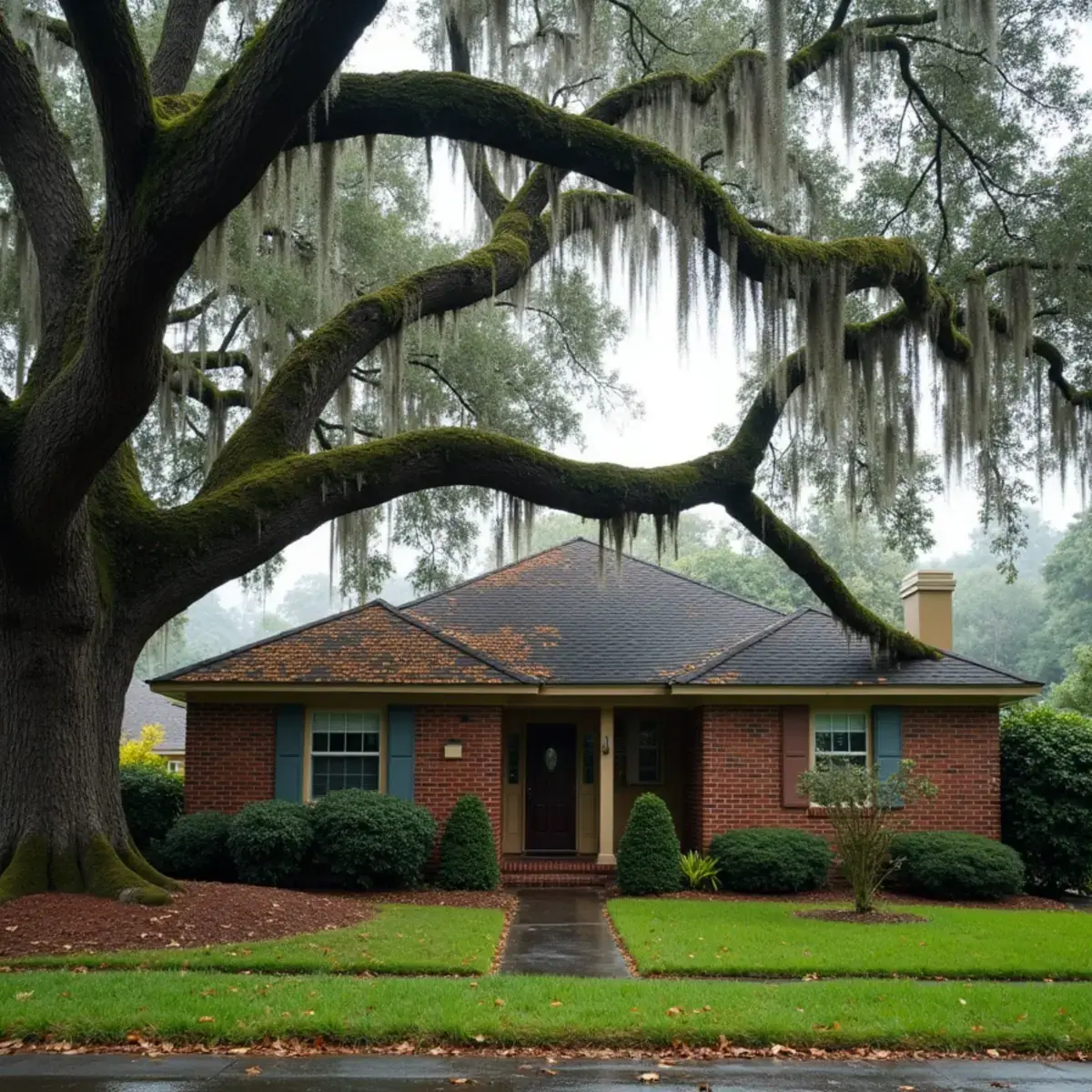
Live oaks are the signature tree on Winter Park's brick streets and around the Maitland lakes. They grow wide and low, so a single tree can shade half a roof. Camphor trees, common in older yards across both cities, grow fast and drop brittle limbs. Together they cause three kinds of roof damage.
Limb strikes
A falling limb cracks clay and concrete tile, tears shingles and bends metal flashing. Heavier limbs can split decking or a rafter even when the surface looks only scuffed. Hurricane Milton in October 2024 left broken limbs on roofs across the area, and ordinary summer thunderstorms bring down smaller ones every year.
Abrasion from overhanging branches
Branches that rest on or sweep across a roof wear through the shingle granules in a few seasons, especially along ridges and eaves. On tile roofs, a branch moving in the wind can loosen tiles and chip edges. The worn spots then leak in the next heavy rain.
Leaf-dammed valleys
Live oaks shed heavily in late winter and spring as new leaves push the old ones off. Those leaves, along with oak catkins and Spanish moss, collect in valleys and behind chimneys. The pile holds water against the roof and pushes it sideways under shingles or tile, which is a common cause of the slow ceiling stains we hear about. A roof leak repair under the canopy often starts by clearing a valley that has been dammed for months.
A tree fell on your roof: what to do first
- Move everyone out of the rooms under the tree, and keep them out. A cracked rafter or a wet ceiling can let go without warning.
- Stay off the roof and away from the tree. Limbs under load can spring or roll when they shift. If lightning or high wind is still around, nobody should be up there, including the roofer.
- Look for downed or touching power lines. If a line is involved, stay well clear and report it to your power company first.
- Shut off power to rooms where water is coming in if you can do it safely from the breaker panel.
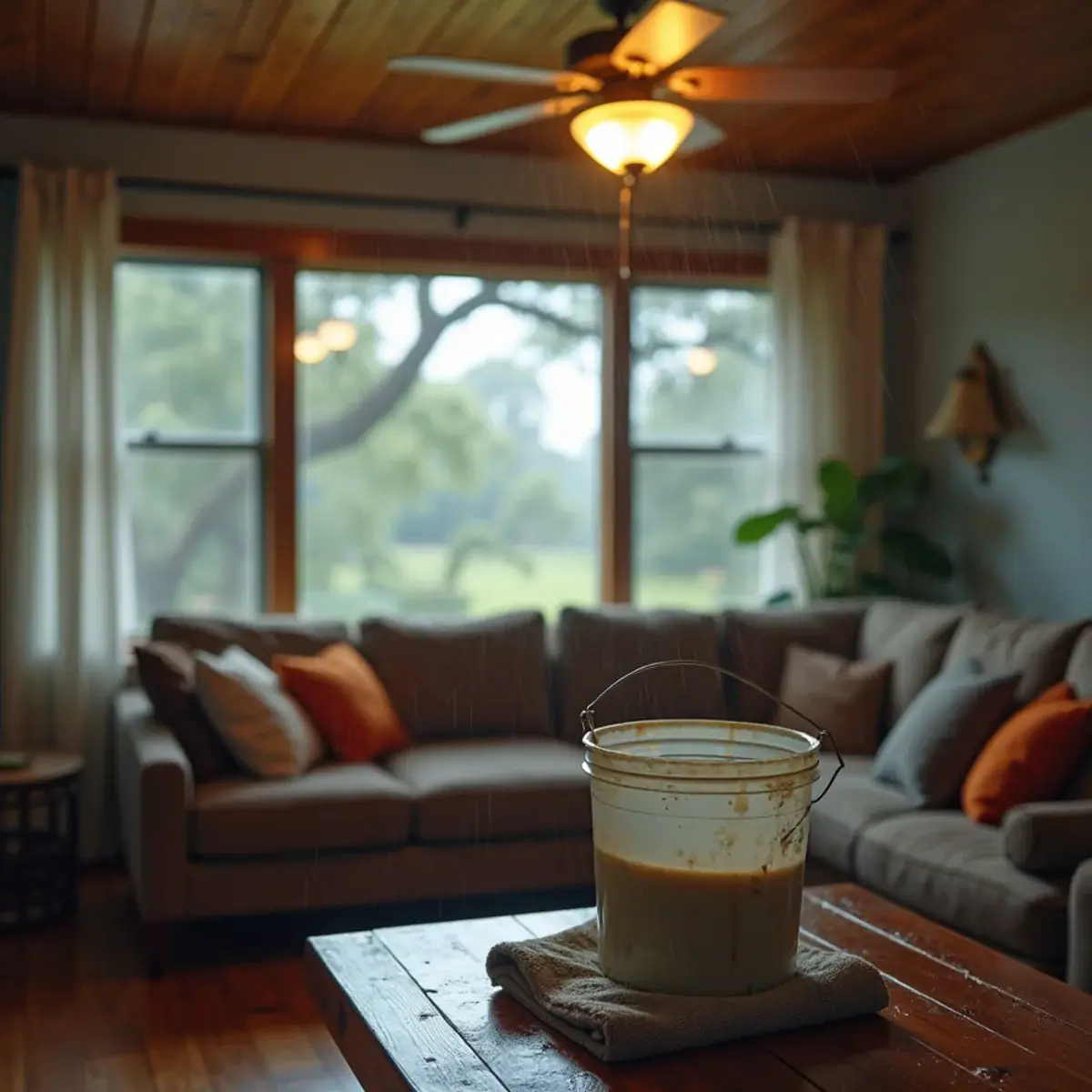
- Catch water inside with buckets and towels, and move furniture and electronics out of the way.
- Take photos and video from the ground and from inside: the tree on the roof, the ceiling, and any water. Keep broken pieces you find in the yard.
- Call for help. Phones here are answered 24/7, and a roofer is sent as soon as it is safe to work.
Our page on emergency roof repair and tree strikes explains what happens once the roofer is on the way, including tarping at night or in rain.
Why you should not cut the tree off the roof yourself
A tree resting on a roof is often holding pressure in odd directions. Cutting the wrong piece first can drop the trunk through the deck, swing a limb into the person with the saw, or tear off more roofing than the fall did. Climbing a ladder onto a wet, damaged roof with a chainsaw is how storm cleanups turn into hospital visits.
How the arborist and the roofer work together
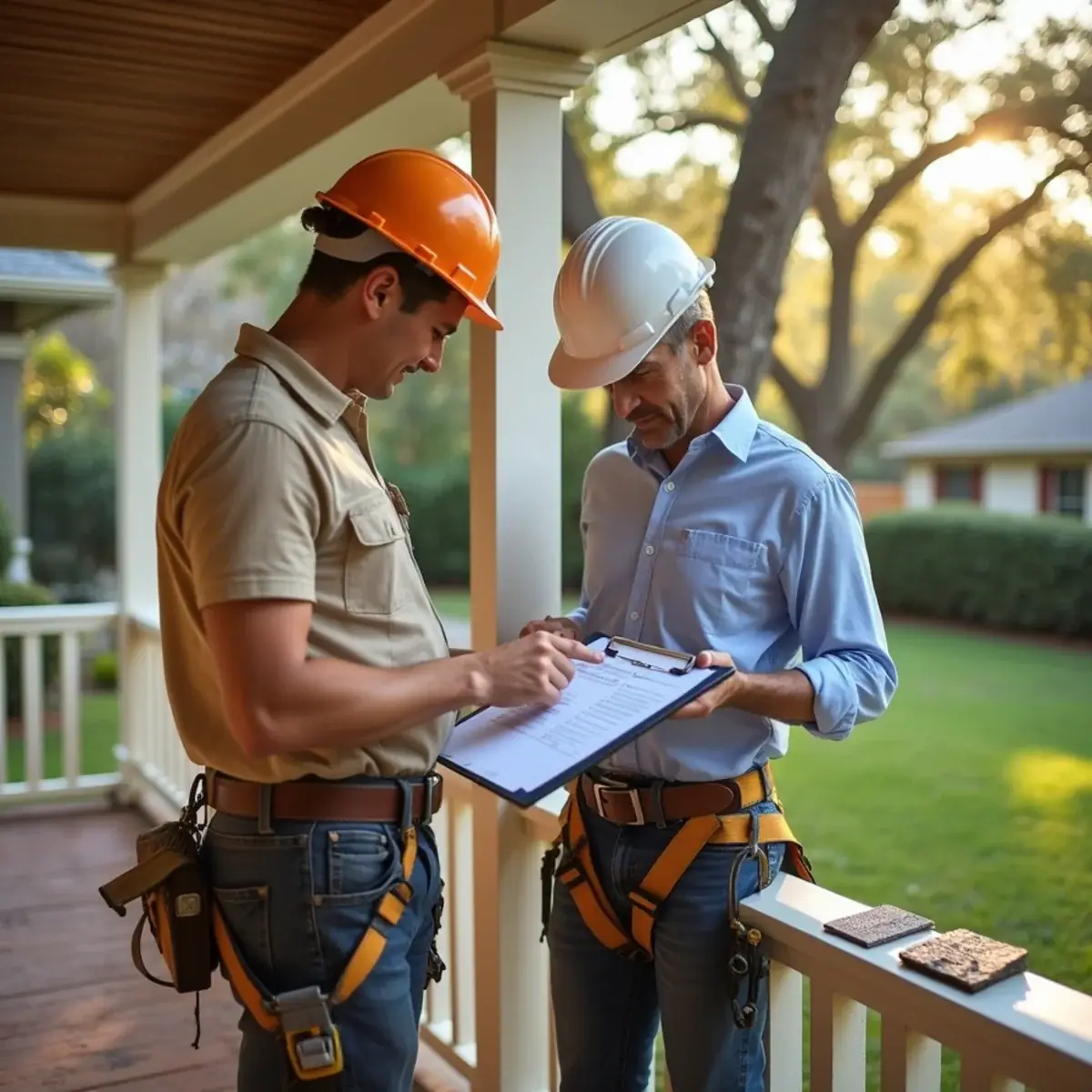
The tree service removes the tree in sections, usually with a crane or rigging for large oaks, while the roofer watches for hidden damage as the load comes off. As soon as the roof is clear, the roofer checks the decking and framing, covers the opening with a tarp or temporary dry-in, and documents everything with photos. Coordinating both the same day keeps rain out of the attic overnight. The permanent fix follows, as described on our storm damage roof repair page.
Tree damage you cannot see from the yard
Once the tree is gone, the roof may look like it lost only a few shingles. The roofer will check for the damage that shows up weeks later if it is missed.
- Cracked or split decking under intact shingles
- Cracked rafters or trusses, found from the attic
- Broken tiles beyond the impact area, cracked when the limb rolled
- Bent drip edge, gutters and flashing that now let water behind the fascia
- Punctured underlayment under tile that looks undisturbed
- Damaged soffit vents and fascia boards along the eave where the limb landed
A typical canopy call in Maitland
A typical Maitland call (illustrative example)
A lakefront home near Lake Maitland has a large live oak over the back slope. During an evening thunderstorm a limb breaks off and lands across a valley. The owner sees a few torn shingles from the yard and a damp spot on the ceiling. The roofer finds the limb also split two deck boards and that the valley had been holding a thick mat of leaves, so the repair covers the deck, the valley and the flashing, not just the shingles.
Calls like this are routine on the older, oak-shaded streets around the Maitland lakes. Our roof repair in Maitland page covers that area in more detail.
Trimming clearance and Winter Park's tree rules
The best tree damage repair is the one you never need. Many arborists aim for roughly 6 to 10 feet of clear space between branch tips and the roof, with extra room over valleys and chimneys; your arborist sets the right clearance for the species and how fast it grows. Have dead wood and weak limbs over the house looked at before hurricane season starts in June.
Winter Park values its canopy and regulates tree removal on private property. Before removing a large oak or another protected tree, check with the city about permits, including any separate process for trees damaged in a storm. Maitland and the other nearby cities have their own rules. Trimming for roof clearance is a different job from removal, but ask the arborist which rules apply before work starts.
| Task | When |
|---|---|
| Clear leaves from valleys and gutters | After the spring oak leaf drop, and again in early summer |
| Arborist check of limbs over the house | Before hurricane season (June) |
| Trim branches touching or near the roof | As needed, by an arborist |
| Look over the roof from the ground after big storms | After any storm that drops limbs |
When a neighbor's tree falls on your roof
As a general rule, if a healthy tree falls in a storm, your own homeowners policy usually responds to the damage to your house, no matter whose yard the tree grew in. Things can change if the tree was dead or visibly failing and the owner knew it. Policies and situations vary, so check your policy and talk to your agent rather than relying on a general rule.
Either way, the steps on your side are the same: keep people safe, document the damage, and get the roof covered so rain does not add to it.
From the roof: judging limb damage once the tree is off
After a limb strike, the visible break is where the inspection starts, not where it ends. Force spreads out from the impact point, so the roofer works outward from the strike until the roofing, deck and framing are all sound again.
Small limbs: the bruise check
A limb that bounces off a shingle roof can leave a bruise instead of a hole: a spot where the shingle mat is fractured under granules that still look fine. The roofer presses around the impact by hand, and a shingle that gives or feels spongy has broken underneath and will likely leak within a season or two. On tile, a cracked piece often hides under the tile above it, so the tiles around the strike get lifted and checked.
Big limbs: when the job outgrows the roof
- Cracked decking gets cut back to sound wood and replaced. That is routine roof work.
- A cracked rafter or truss is framing. Some can be reinforced as part of the repair, but a broken truss or a sagging roof line may need a structural engineer's input before the roof is closed up, and the roofer should say so plainly.
- Tarp now, repair later. When more rain is coming and the full scope isn't clear yet, a solid dry-in is better than a rushed permanent repair over damage nobody has fully seen.
One caution on prevention: heavy cutting is not the answer to canopy risk. Topping an oak or stripping one side can weaken it and lead to more breakage later, so leave roof clearance cuts to a qualified arborist.
Quick answers
Can I stay in my house if a tree is on the roof?
Often yes, but not in the rooms under the tree. Keep everyone out of those rooms until the tree is off and the roofer has checked the framing from the attic. If you see a sagging ceiling, cracked walls, a gas smell or a power line involved, leave the house and call the utility or 911 first.
Should I call the tree service or the roofer first?
Call both, and tell each that the other is coming. The tree crew removes the tree and the roofer dries in the opening right after, ideally the same day. If you can only reach one, a roofer can often tarp around a limb that cannot come off yet and come back once it is removed.
How close can oak branches be to my roof?
Branches should not touch the roof at all. Many arborists aim for roughly 6 to 10 feet of clearance, more over valleys, so wind cannot sweep branches across the shingles and leaves do not pile up as fast. In Winter Park, check the city's tree rules before removing any large tree.
How do I know if a falling branch damaged my roof?
Look from the ground first for torn or scuffed shingles, cracked tile, bent gutters or flashing, and granules or roof pieces in the yard. Then check the attic with a flashlight for daylight, damp insulation or wet wood, and watch the ceilings below for new stains. A small limb can bruise a shingle without leaving a hole, so have a roofer check the impact area up close.
The bottom line on oak limbs and your roof
Under the Winter Park and Maitland canopy, roof damage comes two ways: suddenly, when a limb drops in a storm, and slowly, through leaf-packed valleys and branches rubbing the shingles. For a fallen tree, safety comes first, then a tree crew and a roofer working the same day, then a careful check of the deck and framing. For the slow kind, clearance trimming and clean valleys prevent most of it. If a limb has already hit, tree and storm damage roof repair is the next step.