
Quick answer
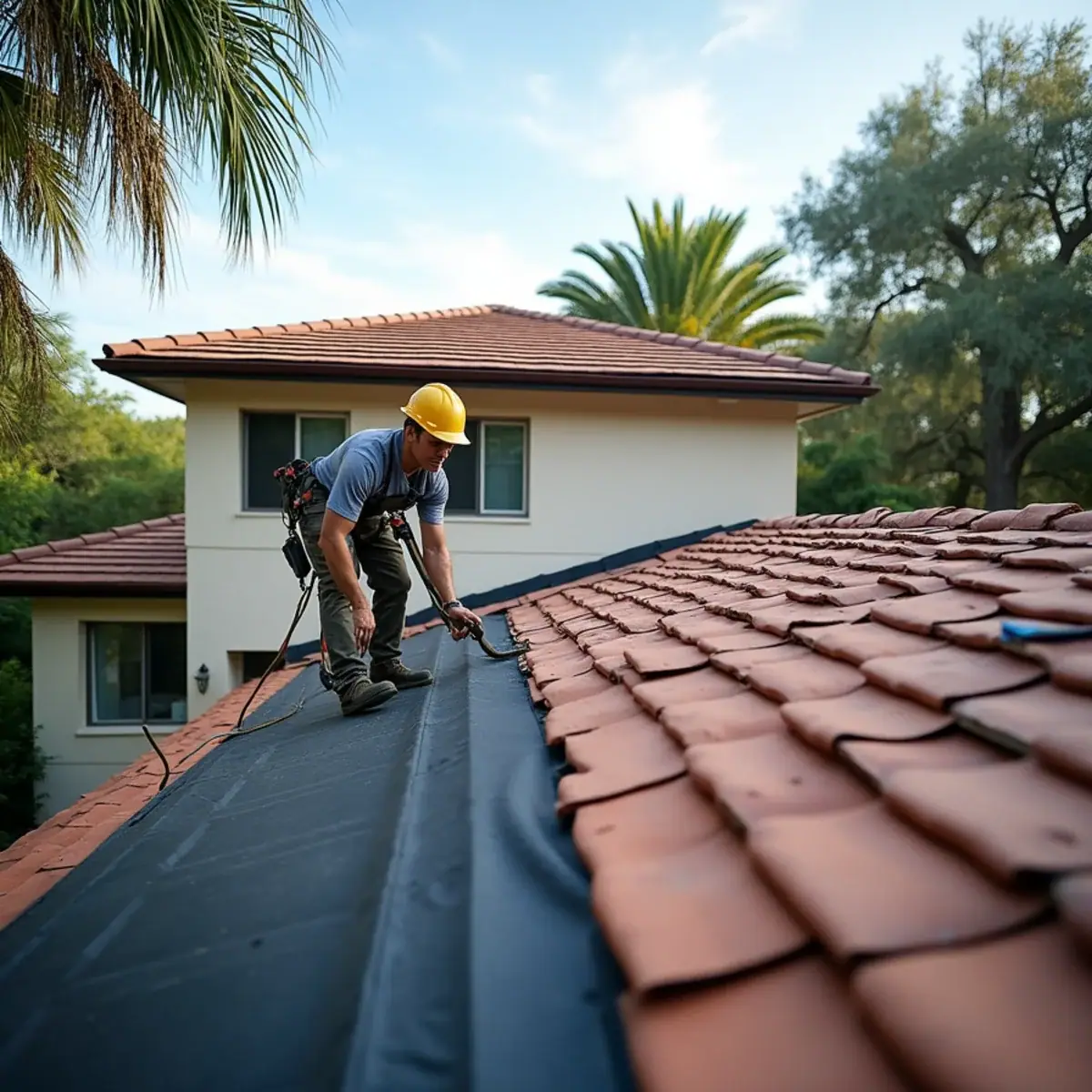
Tile roof underlayment in Florida usually needs replacing at around 20 to 25 years, often while the tiles still look sound, because heat in the tile cavity dries and cracks it. It can't be replaced from above: the roofer lifts and stacks the tile, installs new underlayment and flashing, then relays the sound tile.
A tile roof that is 20 to 25 years old usually leaks because the underlayment beneath the tile has worn out, not because the tiles failed. In Florida, concrete and clay tile can last for decades, but the waterproof layer under them is the real roof, and the heat trapped in the tile cavity dries and cracks it. Once that layer goes, water that slips past the tiles in every rain reaches the wood deck. The fix is tile roof underlayment replacement: lift the tile, install new underlayment and flashing, and set the tile back.
This is one of the most common calls from two kinds of homes in our area: the concrete tile roofs on Oviedo subdivisions built in the 2000s, now crossing the 20-year mark together, and the older clay tile roofs on lakefront homes in Winter Park. From the street both can look perfect.
Why the tile is not the waterproofing
Roof tile sheds most of the rain, but it was never meant to be watertight. Wind-driven rain pushes under the laps, water wicks through hairline cracks, and the gaps at hips, ridges and valleys let some water in by design. That water runs down the underlayment and out at the eave.
Think of the tile as a sun and wind shield laid over the true roof. As long as the underlayment is intact, a little water under the tile does no harm. When the underlayment cracks, tears or loses its bond at the nail holes, the same water goes into the deck instead.
Three kinds of tile roof underlayment on Central Florida homes
Hot-mopped 30/90
The traditional Florida system: a 30-pound felt base sheet nailed to the deck, then a 90-pound mineral-surfaced cap sheet set in hot asphalt. It is found on many older tile roofs, including a lot of Winter Park clay tile. It works well for years, but the asphalt slowly dries out and the felt becomes brittle.
Self-adhered modified bitumen
A peel-and-stick sheet of rubberized asphalt that bonds to the deck and seals around fasteners. It is now the most common choice on tile reroofs in Central Florida. The bond around nails is its main advantage, since nail holes are where older felt systems start to leak.
Synthetic underlayment
Woven or spun polymer sheets that are light and tear-resistant. Only products carrying Florida product approval for use under tile belong on a tile roof, and installation details vary by product, so the roofer matches the underlayment to the tile and attachment method.
| Type | How it is installed | Where you tend to see it |
|---|---|---|
| Hot-mopped 30/90 | Nailed base sheet plus cap sheet set in hot asphalt | Many older tile roofs, including original installs |
| Self-adhered modified | Peel-and-stick sheet bonded to the deck | Most tile reroofs today |
| Synthetic | Mechanically fastened polymer sheet, product-specific | Some newer installs where the product is approved for tile |
How long does tile roof underlayment last? Heat and UV in the tile cavity
Most older felt-based tile underlayment in Central Florida lasts roughly 20 to 25 years. The tile itself often has decades left at that point, which is why homeowners are surprised by a leak on a roof that still looks new.
The space between the tile and the underlayment gets far hotter than the outside air on a July afternoon. Day after day, that heat bakes the oils out of asphalt-based sheets until they shrink, crack and pull away from nail heads. Sunlight reaching the underlayment through broken or slipped tiles speeds the damage at those spots.
Debris adds to it. Oak leaves and grit collect under tile in valleys and along headwalls, hold water against the underlayment and wear it from the top down.
Signs your tile roof leak is an underlayment problem
- Stains that appear only after long, soaking rains. A short afternoon storm may not show anything, but a tropical system that rains for a day finds every weak spot. Ian dropped about 13 inches at Orlando International in 2022, and many tile leaks first showed up then.
- Staining near valleys and where the roof meets a wall. These spots carry the most water under the tile and fail first.
- Broken tiles from foot traffic. AC technicians, satellite installers and pressure washers crack tiles, and each crack lets sun and water reach the underlayment below.
- Tile and felt debris in the gutters. Crumbled bits of black felt or chips of tile at the downspouts point to wear under the tile.
- Slipped or loose tiles. When fasteners or adhesive let go, the underlayment underneath is often worn too.
- Dark or soft spots on the deck seen from the attic. Stains around nails on the underside of the plywood mean water is getting through at the fasteners.
Patching a cracked tile is not always the fix
Replacing a broken tile stops the leak only if the underlayment under it is still sound. On a roof past 20 years, the roofer should lift a few tiles near the leak and look at the underlayment before calling it fixed.
Lift and relay vs full replacement
Lift and relay means removing the existing tile, stacking it on the roof, replacing the underlayment and flashing, and reinstalling the same tile with new fasteners or adhesive. If the tile is in good shape, it keeps the look of the house and avoids buying new tile. Our tile roof repair and lift-and-relay page covers the work in more detail.
Full replacement with new tile, or a switch to another material, makes more sense when the tile is brittle, a large share is broken, the profile is discontinued, or the owner wants a change. The tile roof replacement options page compares materials.
| Situation | Lift and relay | New tile or other material |
|---|---|---|
| Tile solid, few cracks | Usually the better fit | Rarely needed |
| Profile or color discontinued | Possible with salvaged spares | Often simpler |
| Brittle older clay tile | Risky, more breakage | Worth pricing |
| Deck rot found during work | Deck repaired either way | Deck repaired either way |
Either way it is a reroof under Florida code. A permit is needed in most cases, Florida code requires deck re-nailing to current schedules and a secondary water barrier on most reroofs, and the roofer confirms what applies to your house before pricing it.
Can the existing tile be reused?
Concrete tile from the 1990s and 2000s usually comes off in good enough shape to go back on, with some breakage during removal. Older clay tile can be more fragile, so expect more loss.
Broken pieces are replaced with matching tile. If your profile is no longer made, roofers often pull good tiles from a less visible slope for the front and use the closest new match on the back. Any spare tile left from the original install is worth keeping for this reason.
Oviedo concrete tile and Winter Park clay tile
Oviedo grew from about 26,000 people in 2000 to around 40,000 today, and many of the homes built in that wave have concrete tile roofs. Those roofs are now in the 20 to 25-year window at the same time, so the same underlayment leaks show up street by street. Many of these homes also sit in HOA communities that set tile color and profile rules. More on that area is on our roof repair and replacement page for Oviedo.
In Winter Park, the tile is often clay barrel tile on Mediterranean-style and lakefront homes around the Chain of Lakes. Some of these roofs have already had their underlayment replaced once; others still carry the original. Roof age also matters to insurers here, and our post on Florida's 15-year roof rule explains what an insurer's roof letter means for a tile roof.
A typical Oviedo call (illustrative example)
A homeowner in a mid-2000s subdivision sees a brown ring on the ceiling under a valley after two days of tropical rain. The tiles look fine from the yard. The roofer lifts a few tiles at the valley and finds the felt cracked along the nail lines, and the conversation moves from a tile repair to underlayment replacement.
How a roofer tells underlayment failure from a cracked tile
Start in the attic
The roofer maps stains on the underside of the deck to a spot on the roof, measuring from a wall, a vent pipe or the ridge. One small stain under a single broken tile suggests a local problem. Stains strung along the nail lines, or spread down a whole slope, point to underlayment that has let go at the fasteners.
Lift tiles, don't just look at them
On the roof, the roofer steps only where tiles are supported at the overlaps, since a step in the middle of a tile can crack it. Near the leak and a few courses upslope, a handful of tiles come up so the underlayment can be seen and handled. Sound underlayment is still flexible and bonded. Worn felt cracks when bent, shows rust stains at the nail holes, or has dark water tracks on the deck beneath it.
Valleys, headwalls and pipe flashings get the same check, because worn valley metal or a failed flashing can leak on a roof whose field underlayment is fine.
One slope or the whole roof?
If the underlayment under a cracked tile is sound, replacing the tile fixes the leak. If it is worn there, it is usually worn on every slope of the same age. Relaying only the leaking slope is possible, but the others tend to follow, and each separate job repeats setup, tile breakage and often permit work. The roofer should show photos of what was lifted and say plainly which choice the evidence supports.
Quick answers
How long does tile roof underlayment last in Florida?
Older felt-based underlayment under Florida tile commonly lasts about 20 to 25 years, while the tile itself can last much longer. Heat in the tile cavity, debris in valleys and broken tiles shorten that. Newer self-adhered underlayments are expected to hold up better, but a roofer should still check any tile roof past 20 years.
Can the underlayment be replaced without buying new tile?
Yes, in many cases. In a lift and relay, the roofer removes and stacks the existing tile, installs new underlayment and flashing, and reinstalls the same tile. Some tiles break during removal and are replaced with matching pieces. If the tile is brittle or discontinued, new tile may be the better choice.
Does tile underlayment replacement need a permit in Oviedo or Winter Park?
Usually, yes. Replacing underlayment across a roof is treated as a reroof. The City of Oviedo and the City of Winter Park each run their own building department, and the licensed roofer pulls the permit and schedules the required inspections.
Will sealant on a cracked tile stop a tile roof leak?
Only briefly, if at all. Sealant or roof cement on top of a cracked tile can slow water at that one spot, but it does nothing for worn underlayment below, and it can hold debris and water where they do more harm. A cracked tile should be replaced with a matching one, and on a roof past 20 years the underlayment beneath it should be checked at the same time.
The bottom line on tile roof underlayment
On a Florida tile roof past 20 years, a leak is more often an underlayment problem than a tile problem, and the tile itself is often worth saving. Before agreeing to a tile swap or a full replacement, ask what the roofer saw under the lifted tiles and get photos of it. A tile roof inspection that checks the underlayment gives you that evidence before you choose between lift and relay and new tile, and the roofer gives a written price before work starts.