Quick answer
Replacing the roof on a historic Winter Park home is allowed; what changes is the review. On a designated property or inside a historic district, a new roof material, color, profile or shape may need city approval before the permit, while like-for-like work is usually simpler. Ask the city's historic preservation staff first.
Yes, you can replace the roof on a historic Winter Park home. If the house is on the Winter Park Register of Historic Places or inside one of the city's historic districts, a change to the roof's material or appearance may need review by the Historic Preservation Board before the work goes ahead. Replacing like with like is usually the simplest path for historic home roof replacement in Winter Park. Confirm current requirements with the City of Winter Park Planning / historic preservation staff before choosing materials, then have the licensed roofer pull the building permit.
About one in ten Winter Park homes was built before 1950. Many of them have been reroofed several times, and each tear-off uncovers something a newer house does not have: board decking, mismatched layers, or clay tile that is no longer made. This post covers what to check before you pick a material and what to expect once the old roof comes off.
Is your home historic? Districts and the Winter Park Register
Winter Park has a local register of historic places and several historic districts, including Olde Winter Park, the College Quarter near Rollins College, and Virginia Heights East. A home can be designated on its own or sit inside a district as a contributing property.
An old house is not automatically a designated one. Plenty of 1920s and 1930s homes have no designation at all, and some newer homes sit inside a district boundary. A listing on the National Register of Historic Places is also different from local designation and may not carry the same local review. The quickest way to know where your home stands is to ask the city's historic preservation staff with your address.
When the Historic Preservation Board may review a reroof
On a designated property, changes to the roof's material or appearance may need review. The kinds of changes that tend to raise the question include:
- Switching from clay tile to shingles, metal or concrete tile
- Changing the tile profile, such as barrel to flat, or a noticeably different color
- Changing the roof shape, overhangs, dormers or eave details
- Adding skylights, solar panels or vents that can be seen from the street
- Removing or altering a chimney, parapet or decorative trim
Ask before you choose
Requirements, review steps and timing can change. Confirm current requirements with the City of Winter Park Planning / historic preservation staff before choosing materials or signing a contract, and build any review time they describe into your schedule.
Like-for-like replacement vs a material change
Most historic reroofs fall into one of two paths. The table shows what each usually involves; city staff decide what applies to your house.
| Path | What it means | What to ask the city |
|---|---|---|
| Like-for-like | Same material, profile and color as the existing roof, same roof lines | Whether review is needed at all, or only staff sign-off |
| Material or appearance change | New material, profile, color, roof features or trim | Whether the Historic Preservation Board must review it, and what to submit |
Homes that were reroofed in shingles decades ago, over what was once clay tile, raise a fair question: is going back to tile a change or a restoration? That is a question for city staff, with old photos if you have them.
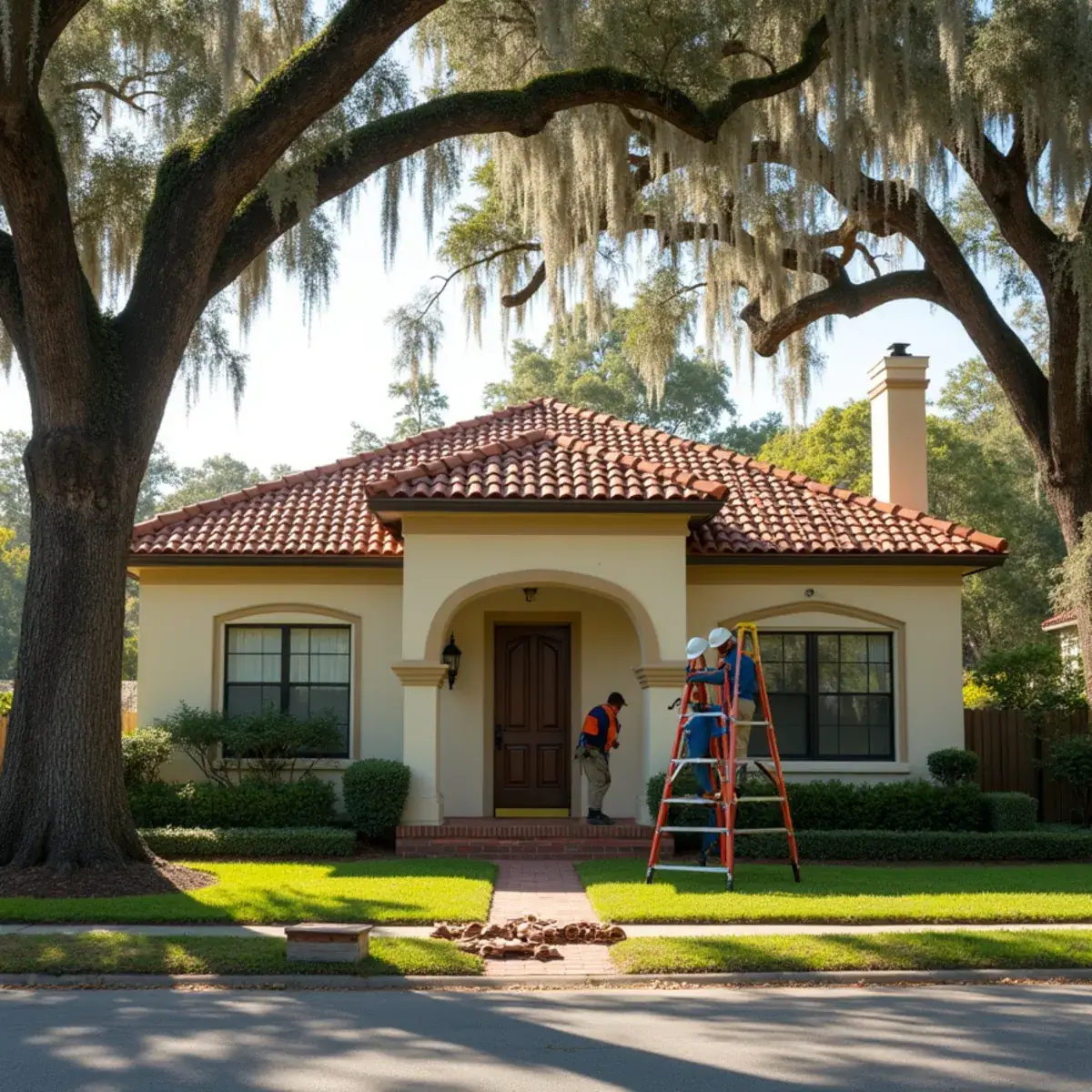
Matching clay tile on a historic roof
Clay barrel tile on a Winter Park Mediterranean Revival house has usually weathered into a mix of tones that new tile does not match on day one. A few approaches help:
- Save the good tile. In a lift and relay, the existing tile comes off, the underlayment is replaced, and the same tile goes back on.
- Move tile between slopes. Sound original tile goes on the street-facing slopes; the closest new or reclaimed match goes on the back.
- Blend new tile. Some manufacturers sell blended color ranges that sit closer to aged clay than a single color.
- Look for reclaimed tile. Salvaged clay tile of the same profile can fill gaps when the original is no longer made.
Clay tile itself often outlasts the underlayment beneath it by decades. Our page on clay tile roof repair and lift-and-relay work goes further, and the post on why old tile roofs leak when the tiles look fine explains the underlayment side.
Old board decking: 1x boards, gaps and re-nailing
Houses built before plywood was common often have decking made of 1x boards nailed across the rafters. Some were laid tight; others were spaced, a holdover from wood shingle roofs. After many decades and several roofs, boards can be split, rotted at the eaves, or held by nails that no longer grip.
Florida code requires deck re-nailing to current schedules and a secondary water barrier on most reroofs; the roofer confirms what applies once the old roof is off. Rotted boards are replaced. Where gaps or board condition do not suit the new covering, the roofer may recommend new boards or a sheathing layer over them.
A new sheathing layer adds thickness at the roof edge, which can change how fascia and trim line up. On a historic house that detail matters, so ask the roofer how the edge will look before the job starts.
Permits: who issues them and who pulls them
Inside Winter Park city limits, building permits come from the City of Winter Park Building and Permitting Services. Any historic review is a separate step through the city's planning and historic preservation staff, and it may need to happen first. The licensed roofer pulls the building permit and schedules inspections.
A Winter Park mailing address does not always mean the city issues the permit. Some homes with Winter Park addresses are in unincorporated Orange or Seminole County. Neighboring Maitland, which also has older lakefront homes, runs its own building department; see our page on roof repair and reroofing in Maitland for that area.
Planning a historic reroof, step by step
- Confirm with the city whether your home is designated or inside a historic district.
- Ask historic preservation staff what review, if any, your planned roof needs.
- Have a roofer inspect the roof and attic, including decking and any old layers.
- Choose the material and tile profile with the city's answer in hand.
- Complete any required review, then the roofer pulls the building permit.
- Tear-off, deck repairs and re-nailing, then underlayment and the new roof.
- Final inspection by the building department.
For materials, timing and what drives the cost, see our roof replacement guide for Winter Park homes. The roofer gives a written price before work starts.
What changes on a historic reroof job
The roofing itself is familiar work. The difference is how much has to be recorded, saved and checked before and during tear-off.
Record the details before anything comes off
The roofer photographs and measures what the new roof has to reproduce: eave and rake trim, exposed rafter tails, the way barrel tile is closed off at the eave, and mortar-set hips and ridges. Once the old roof is in a dumpster, those details are hard to rebuild from memory, and the city may ask how they will be kept.
Count the tile early
On a clay tile roof, the tile comes off by hand and is sorted on the roof, and some breakage is normal with old clay. Knowing early how many sound tiles remain shows how much reclaimed or blended tile is needed, and finding a good match can take longer than the reroof itself.
Check the framing before going heavier
Clay tile weighs far more than shingles. Going from shingles back to tile, whether as a restoration or a change, can call for a check of the rafters, and sometimes an engineer's review, before the material is ordered.
Open only what can be dried in
An old board deck with gaps lets water straight into the house. On summer jobs, the roofer opens only as much roof as can be dried in the same day, ahead of the afternoon storms.
Quick answers
Do I need Historic Preservation Board approval to replace my roof in Winter Park?
It depends on the house and the change. If your home is designated or in a historic district and the new roof changes material or appearance, review may be needed. Like-for-like work may be simpler. Confirm with the City of Winter Park's historic preservation staff before choosing materials.
Can I put a metal roof on a historic home in Winter Park?
Possibly, but on a designated property a switch to metal is a material change that may need review, and the answer can depend on the house's style and what it had originally. Ask the city's historic preservation staff early, before you order material or sign a contract.
Can the original board decking stay under a new roof?
Often, yes. Sound boards can stay and are re-nailed to current schedules, while rotted or split boards are replaced. If gaps or condition do not suit the new covering, the roofer may recommend a sheathing layer. The roofer confirms what the code and the product require once the old roof is off.
What is a Certificate of Review in Winter Park?
It is the City of Winter Park's approval for exterior changes to a property on the Winter Park Register of Historic Places or inside a historic district. Depending on the change, an application may be handled by staff or go to the Historic Preservation Board. Like-for-like roof work is often simpler than a change in material or appearance. Ask the city's historic preservation staff which path applies before you schedule the roofer.
The bottom line on reroofing an older Winter Park home
A historic reroof goes best in a set order: find out whether the house is designated, learn what review the planned roof needs, then choose materials with that answer in hand. Expect surprises under the old roof, especially board decking and extra layers, and leave room in the schedule for tile sourcing and any review. A roof and attic inspection before a historic reroof is a sensible first step, because it shows the decking, framing and tile condition before you commit to a material or a timeline.